Automotive Ethernet basics: what is 10BASE-T1S?
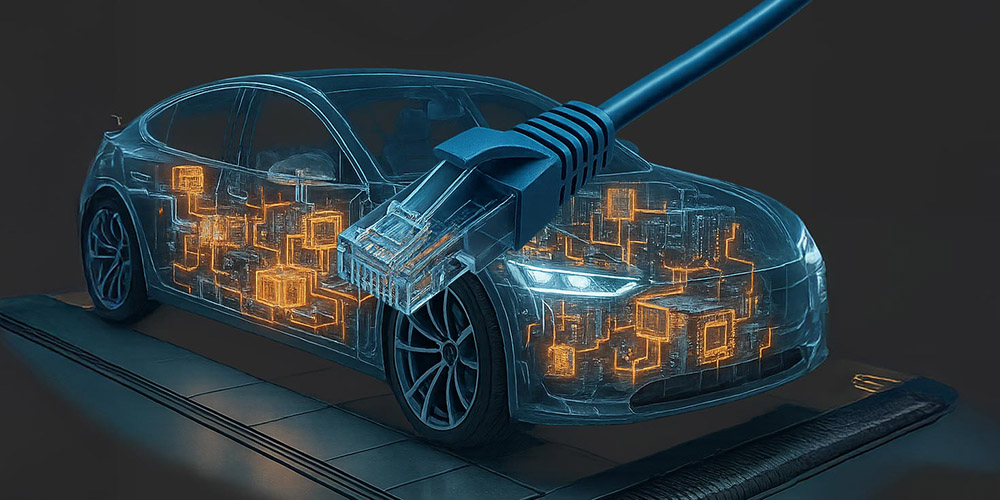
Vehicles are evolving toward Software-Defined Vehicles (SDV), where innovation increasingly comes through software updates. This transformation requires a powerful, scalable, and cost-effective onboard network, combining high-bandwidth streams for sensor fusion and ADAS with robust channels for basic functions.
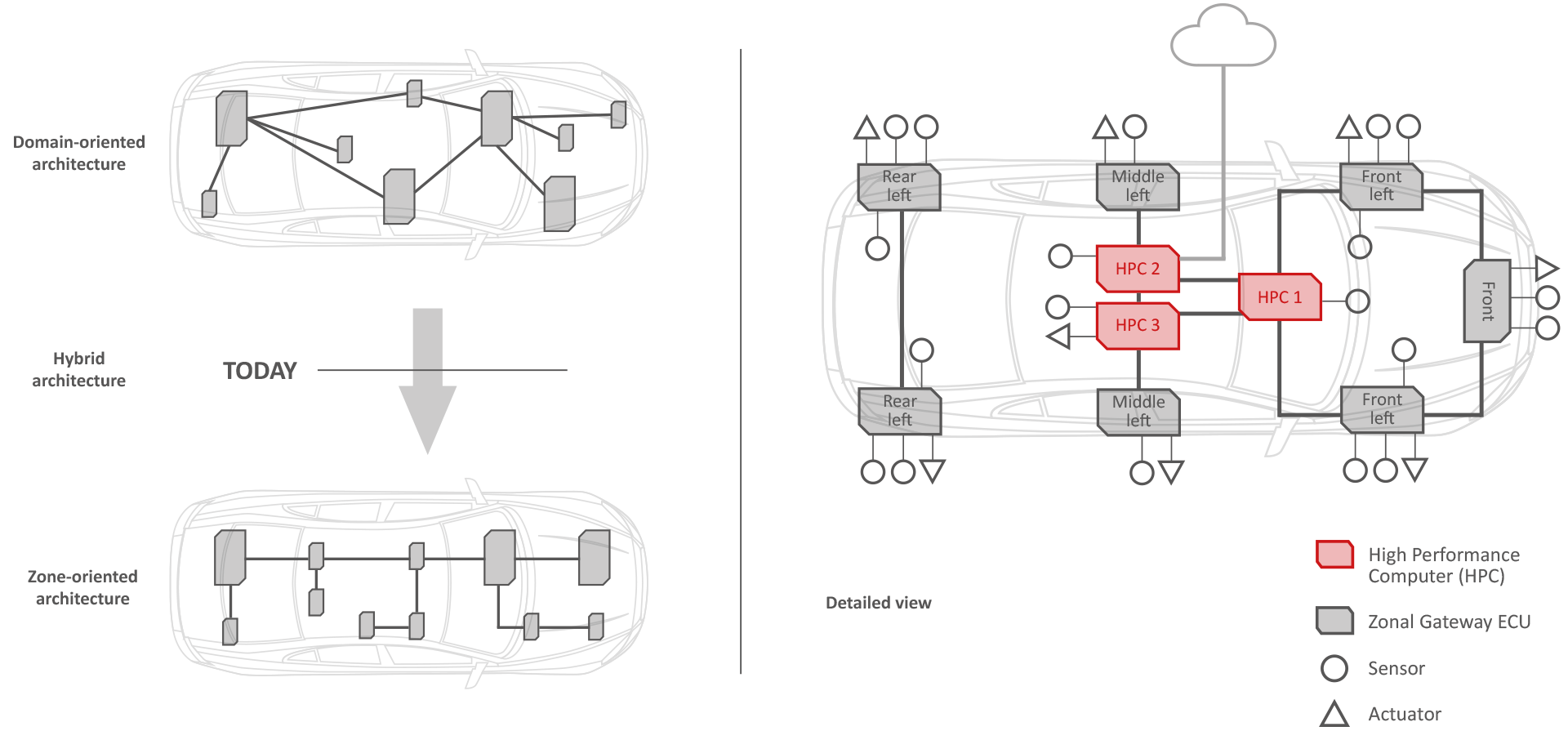
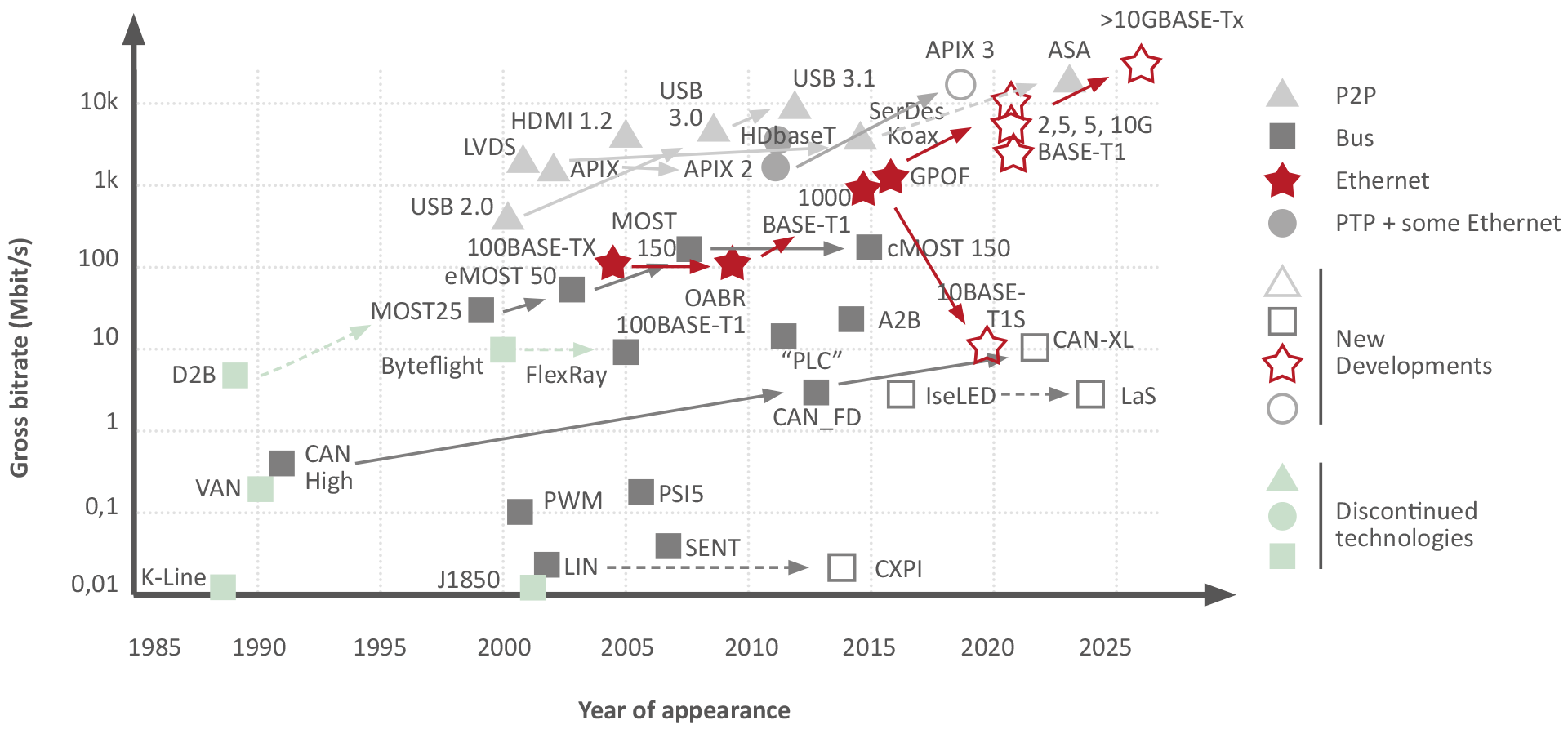
While high-performance computers (HPCs) become the central data nodes, many peripheral components require a robust, cost-effective, and simple-to-implement network. 10BASE-T1S offers an attractive alternative here to established fieldbuses (CAN CC, LIN, FlexRay). A Single Pair Ethernet variant specified in 2019 by IEEE 802.3cg, it has become a central element of zonal architectures.
10BASE-T1S basics
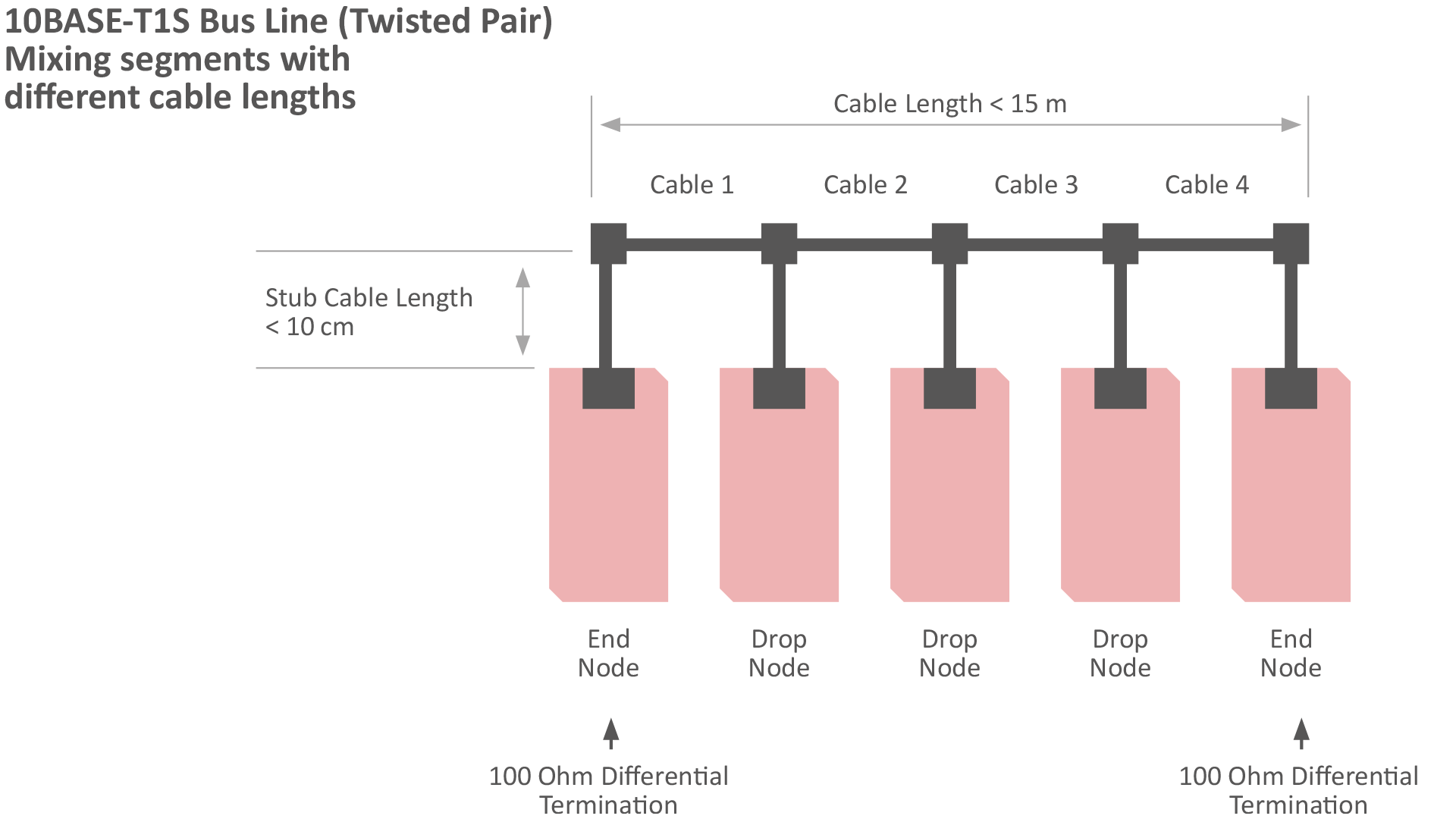
10BASE-T1S enables transmission at 10 Mbit/s over a single twisted pair and supports a multidrop topology where up to eight nodes can operate on the same line. Since it uses the PLCA (Physical Layer Collision Avoidance) access method, communication is half-duplex, which guarantees real-time performance even with multiple nodes.
The heart of the system: the PLCA process
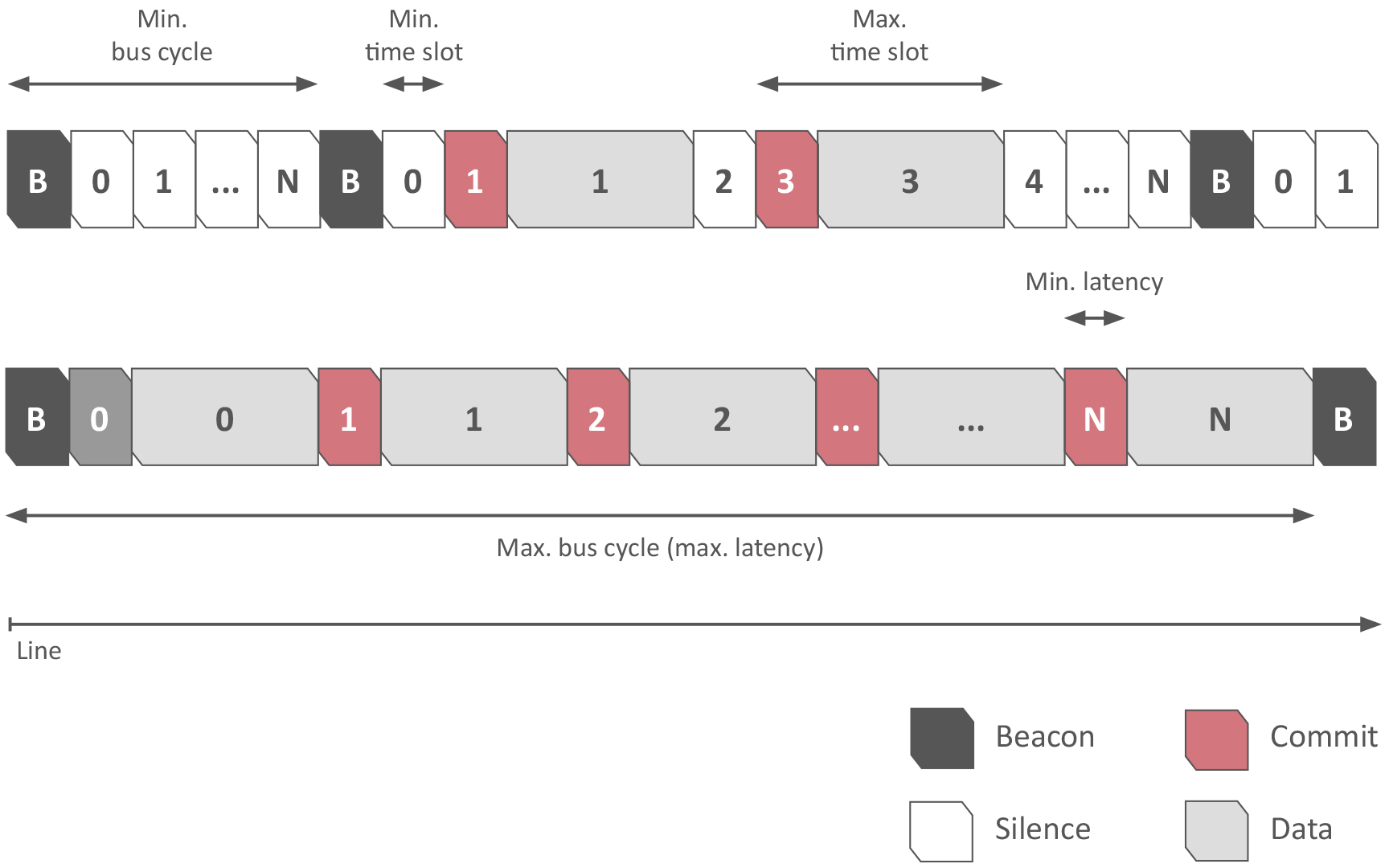
The PLCA method is the core of 10BASE-T1S and guarantees collision-free operation in half-duplex. Each node on the multidrop network receives a fixed identifier. A coordinator distributes "beacons" (synchronization signals) at regular intervals, from which each node derives its "transmit opportunities" (TOs). A node can only transmit when it is its turn; otherwise it stays silent.
The minimum and maximum cycle time of the process depends on the data volume. At minimum — when almost nothing is sent — the cycle is very fast, unused opportunities being immediately skipped. At maximum, all nodes use their opportunity with full frames: the cycle lengthens but remains deterministic, with a packet waiting at most for the next turn. PLCA thus guarantees short response times under light load and a clear upper latency bound under heavy load — a kind of "orderly broadcast."
The wiring is particularly simple: up to 15 m is often achievable with unshielded twisted pair, greatly reducing cost and weight. Power over Data Line (PoDL) allows power and data to be transmitted simultaneously — an advantage in sensor-actuator networks. In the future, 10BASE-T1S will integrate features such as MACsec for encrypted communication.
Typical automotive use cases
The advantages of 10BASE-T1S lie in reduced wiring complexity — and thus weight — and the ability to gradually replace existing CAN or LIN topologies with Ethernet. Typical areas:
- Body and comfort: door control units, window lifters, seat adjustment.
- Sensors and actuators: parking assistance, lighting control, climate control.
- Diagnostics and maintenance: integration with existing Ethernet diagnostic protocols such as DoIP.
- Cross-sector: also relevant for cost-sensitive sensor networks in industrial automation.
Key advantage: the Ethernet base allows smooth integration into zonal architectures, connecting simple devices directly to HPCs without additional gateways. Where CAN and LIN reach their limits of scalability and service-oriented communication (SOME/IP), 10BASE-T1S advances Ethernet homogenization — unified diagnostic tools, security mechanisms, and protocol stacks.
Practical solutions for embedded communication
Building on its automotive expertise, HMS Networks already supports the growing importance of 10BASE-T1S with high-performance automotive gateways designed for OEM and Tier 1 test engineers.