Flexible HiL tests for radar ECUs
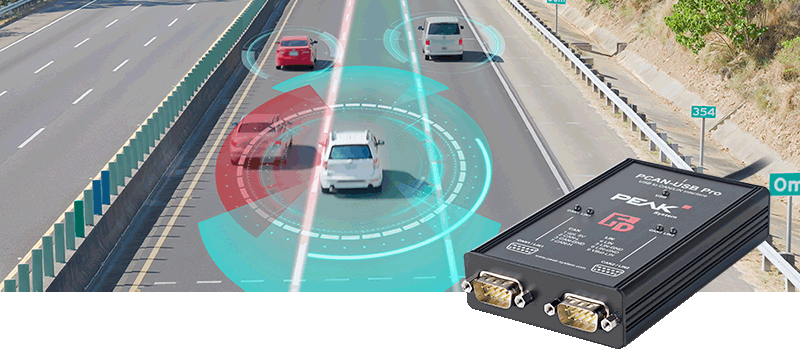
Automotive supplier — ADAS
HiL benches that are costly, scarce and hard to adapt
PCAN-USB Pro FD, PCAN-Basic API
The problem
A major German automotive supplier needed to test a new radar control unit efficiently and reliably. As a manufacturer of driver assistance systems — adaptive cruise control (ACC), emergency braking — it must meet the highest safety and reliability requirements, which means these critical systems must be tested very early in development. The test environment also needed to remain flexible, cost-effective, and usable by several teams in parallel.
The existing HiL test benches were very costly to purchase and operate, and available in limited numbers. Technically difficult to adapt, they only allowed new test ideas or last-minute adjustments to be incorporated at considerable effort — resulting in validation bottlenecks and development delays.
The solution
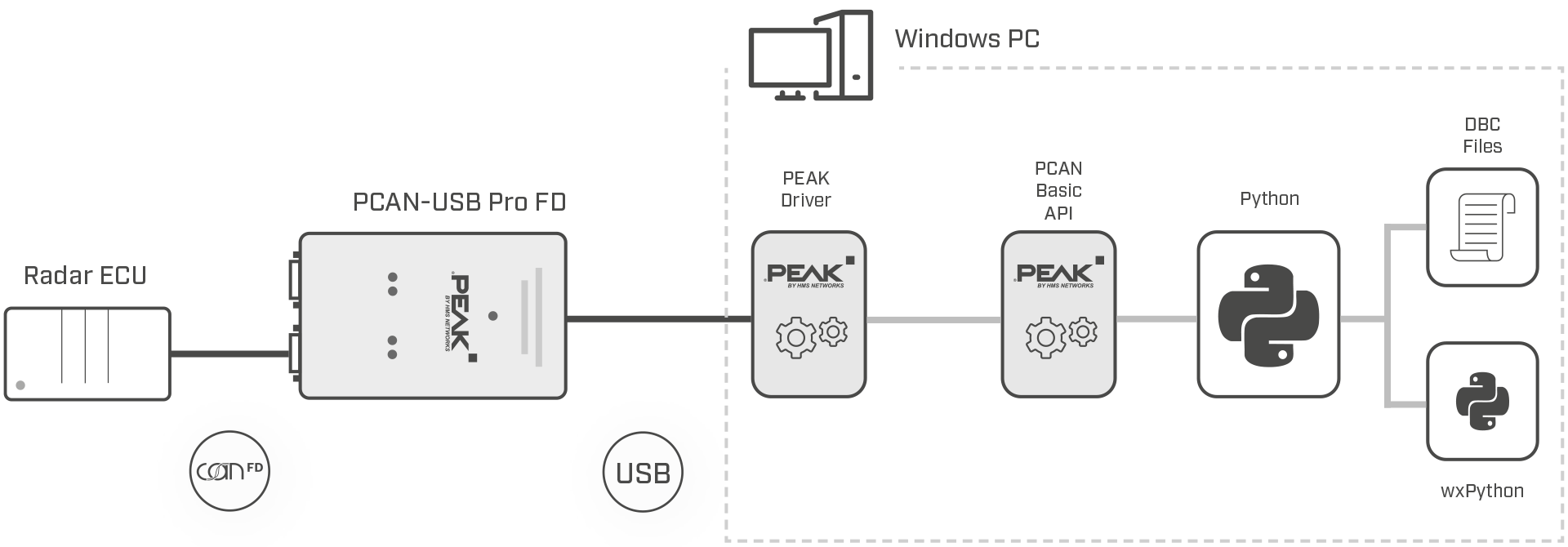
A hardware-in-the-loop (HiL) system was developed based on standardized hardware and freely extensible software. At the heart of the setup: the PCAN-USB Pro FD interface, which connects the radar control units directly to a test PC via USB.
1. Simulation and automation
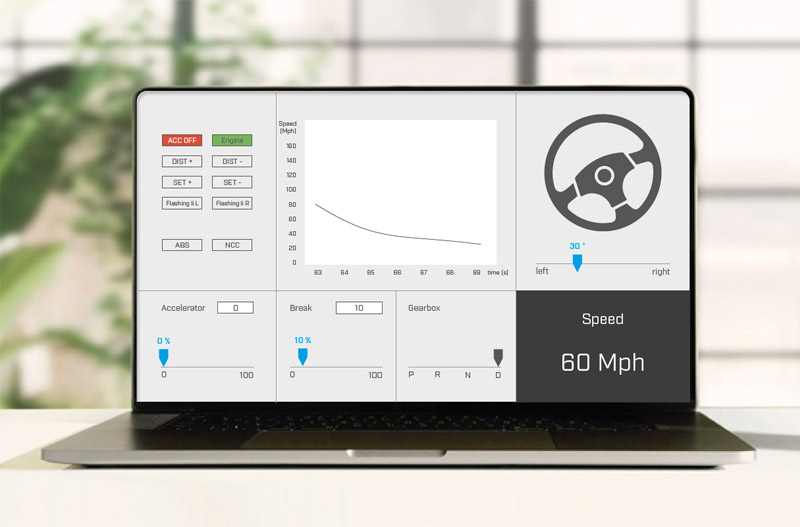
Under Windows, the PC runs specifically developed test software that simulates typical driving maneuvers. Developers rely on the PCAN-Basic API to implement automated test sequences in Python, with a graphical interface visualizing results in real time.
2. The strengths of the PCAN-USB Pro FD
- Plug-and-play USB connection, CAN and CAN FD support;
- Two simultaneous CAN FD channels and two simultaneous LIN channels;
- Galvanic isolation of each CAN FD channel (up to 500 V);
- Up to 64 bytes of payload data per frame at 12 Mbit/s;
- 1 µs timestamp resolution, backward compatibility with classic CAN (2.0);
- Rugged aluminum housing.
The result
The supplier now tests its radar ECUs cost-effectively, on standardized hardware rather than expensive HiL test benches. The environment adapts flexibly to new scenarios and automates processes; support for CAN FD and LIN, along with backward compatibility, protects the investment long-term; the rugged housing and galvanic isolation ensure reliable operation.