CAN XL across all PEAK software
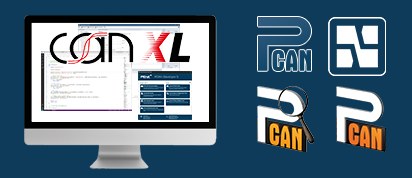
All PEAK software for development, monitoring and analysis now fully supports CAN XL.
CAN XL support is officially extended to the whole software base. Following its integration into the PCAN-Basic API (development library) and into the PCAN-Explorer 7 ecosystem (CAN analysis software), which includes PCAN Net Configuration and PCAN Status Display, CAN XL is now fully operational in PCAN-View (CAN monitor) and in PCAN-Developer 5 (application development kit).
Native Rust language support
To align with modern systems programming practices, the PCAN-Basic API introduces native Rust support. Designed for cross-platform workflows on Windows and Linux, this release includes a dedicated FFI module, PCANBasic.rs, intended for smooth, low-overhead integration into Rust crates. Several production-ready console examples have been added to the SDK to speed up implementation.
The PCAN API Guide
An interactive companion to the PCAN API (CanApi5.dll), the PCAN API Guide helps developers generate, run and validate API calls in real time, in several programming languages. The user selects a function, the parameters are filled in automatically according to the connected PCAN hardware, the call runs directly in the tool and the return values are displayed immediately. Built-in shortcuts make it easy to open the related PCAN tools and observe the effect of the calls.
.NET and CAN FD light
At the same time, the Peak.PCANBasic.NET NuGet package receives a major update: explicit XL extensions to the Worker class, echo message reception notifications — with explicit registration of system events triggered on receipt of an echo frame — and specialised broadcast mechanisms.
For automotive test benches targeting localised subsystems, PCAN-Developer adds full support for CAN FD light, with full-source implementation models for a Commander node and a Responder node.