CAN, CAN FD, CAN XL: what are the differences?
CAN, CAN FD and CAN XL are three generations of the same bus. Each one increases the data rate and the message size to meet the growing demands of the automotive and automation industries.
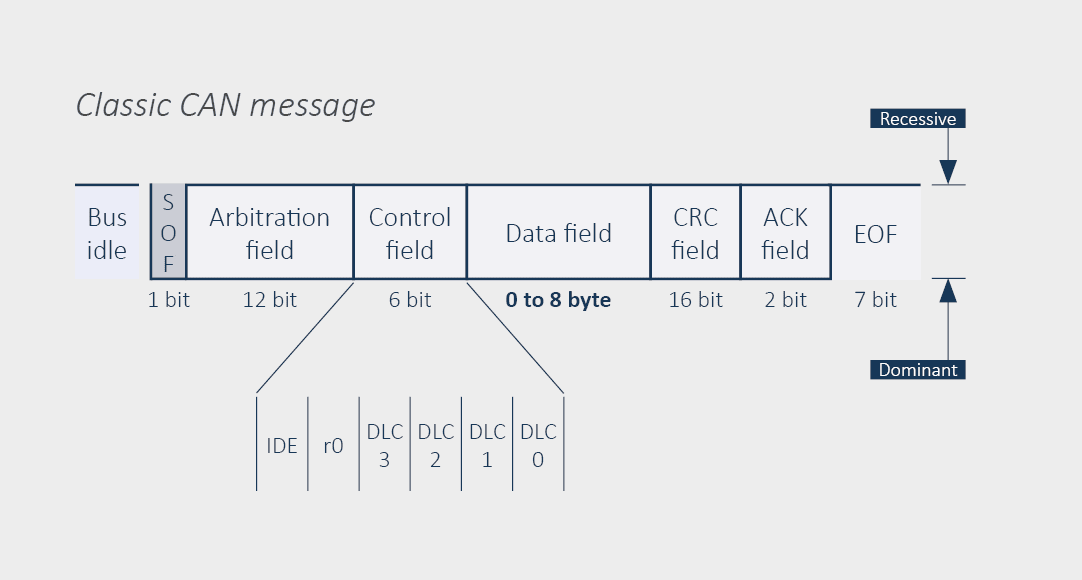
Classic CAN
CAN (Controller Area Network) was developed in the 1980s. It is widely used in the automotive industry to network control units (ECUs), as well as in industrial applications. Many higher-layer protocols are based on it: CANopen, DeviceNet or SAE J1939.
Classic CAN supports data rates of up to 1 Mbit/s and carries a maximum of 8 bytes of user data per message.
CAN FD
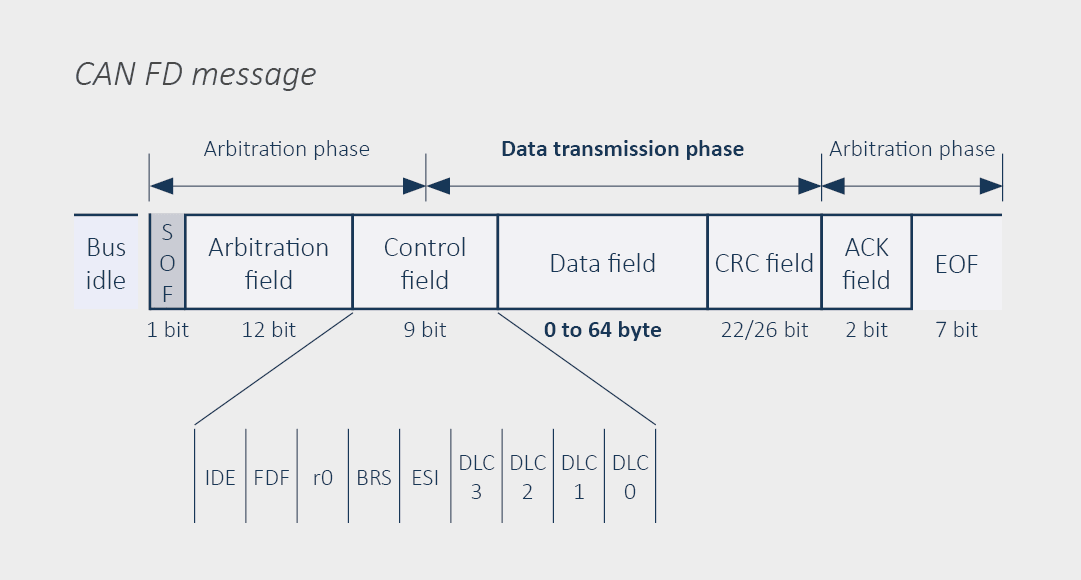
The need to transfer larger amounts of data grew above all in the automotive sector. For this reason Bosch presented, in 2012, an extended version of classic CAN in which the usable data rate and the user data length were significantly extended, while proven CAN concepts were retained: arbitration based on the message ID, event-controlled sending of messages and acknowledgement of received messages using the acknowledge bit.
In contrast to classic CAN, CAN FD transmits up to 64 bytes per message. During the data phase it can switch to a higher bit rate, up to 5 Mbit/s (in some cases 8 Mbit/s). Its main area of application is currently the automotive environment; it is less often found in industrial applications.
CAN XL
CAN XL appeared shortly after CAN FD. This development reflects the rapid advances in automotive electronics, in particular the influence of Automotive Ethernet and IP technologies, which are significantly changing the way vehicles communicate.
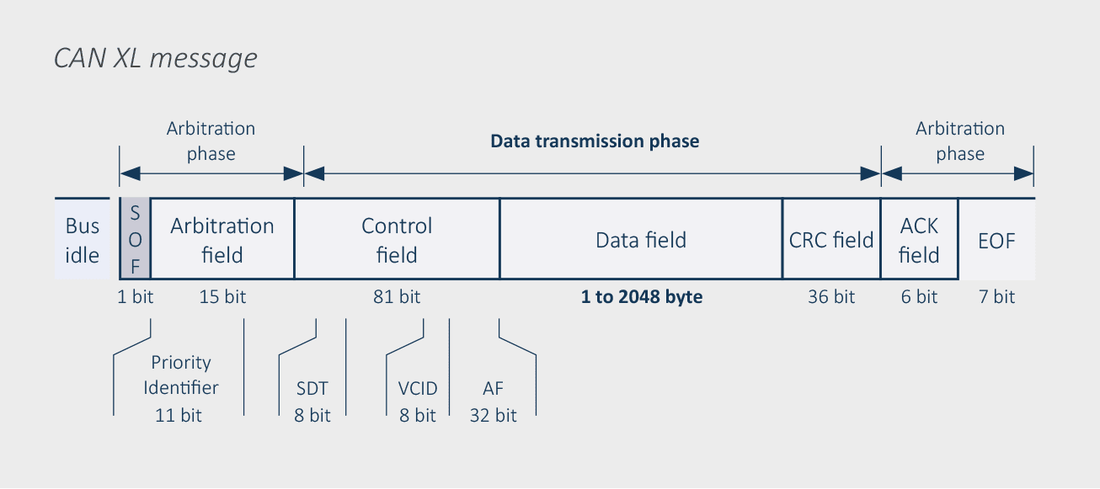
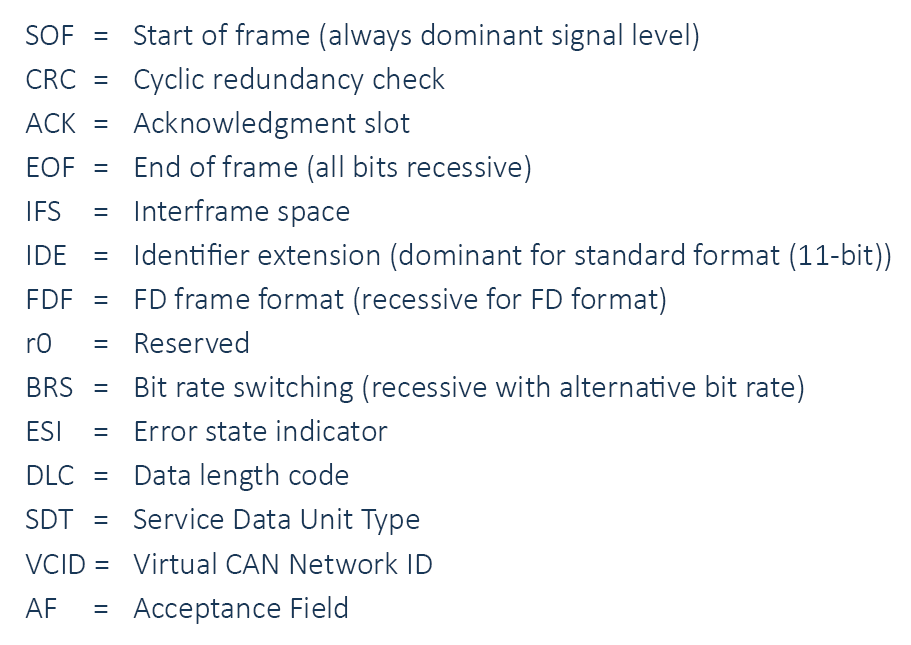
Its functional principle and basic structure correspond to those of CAN FD. The identifier, however, now only serves as a priority ID for arbitration: a 32-bit Acceptance Field (AF), part of the control field, takes care of addressing.
The arbitration rate remains unchanged, below 1 Mbit/s, but the data rate makes a huge leap forward — up to 20 Mbit/s. With the data field extended to 2,048 bytes, Ethernet frames can now be transmitted inside a CAN message for the first time.
The new SDT (Service Data Unit Type) field also makes it possible to refer to the next higher-level protocol, and therefore to interpret the user data differently depending on its value. The VCID (Virtual CAN Network ID) field, for its part, subdivides a physical CAN XL network into several logical networks: its 8 bits allow up to 256 distinct logical networks.
In summary
Classic CAN was designed for basic network requirements. CAN FD and CAN XL offer extended capabilities in terms of data rate and data length, to cope with the growing need for higher data transmission and larger data packages in modern automotive and industrial applications.